
P R O T E S T ‘ 6 2
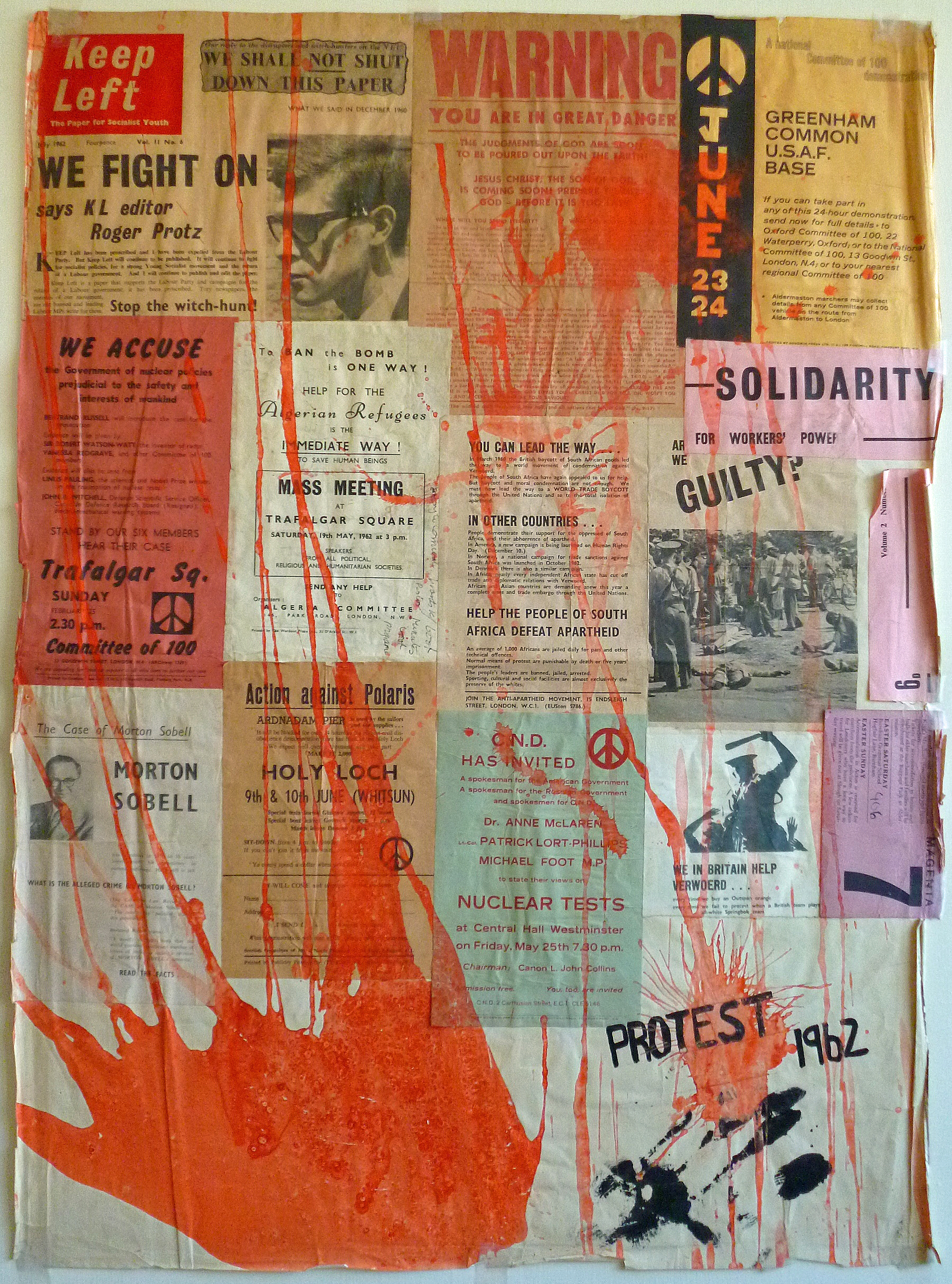
George Orwell, writing in the left of centre British weekly Tribune, October 1945, thirteen weeks after the atom bomb was dropped on Hiroshima speculated that it was likely the world would be blown to bits by atom bombs within five years. (1)
Five years on from writing that, the war between communist North Korea and non-communist South Korea was into its fourth month, at a time that the USSR had already exploded its own atomic bomb, on 29 August, 1949. George Orwell died from tuberculosis on 21 January 1950, before the period of his prophecy had expired.
The dread of an apocalyptic end to human life was tangible for many people – with the images of Hiroshima and Nagasaki as much a visual horror of where “Mankind” had arrived at in the mid twentieth century, as the photos of the piles of concentration camp corpses, semi-burnt human remains in ovens, and skeletal humans staring out from barbed wire fencing.
The fear of nuclear destruction affected a school boy acquaintance of Le Patron in the early 1950’s, who repeatedly would run away from school to be with his mother in London in case the Bomb dropped. A police car would always bring him back. The school Le Patron attended boarded many London boys from the likes of Bermondsey, from what in those days were called “troubled backgrounds”. They were sent out by the London County Council to the Essex countryside on the perennially unproven belief that plenty of fresh country air was therapeutically beneficial for such children.
Such was the fear and concern about the possibility of a devastating nuclear war that in Britain the Campaign for Nuclear Disarmament was formed in 1958 with the hope of persuading the British Government of unilaterally disarming its nuclear weapons. Historically it was the largest such campaign against nuclear weapons of any nation where protest and opposition was allowed.
The newsworthy manifestation of CND’s campaign was the annual Aldermaston to London March over the Easter weekend. Aldermaston was a small village in the Berkshire countryside. In 1962 the former 2nd World War aerodrome RAF Aldermaston housed the Government Atomic Weapons Research Establishment. The march, besides highlighting opposition to the British atomic weapons, also gave those walking along the A4 a sense of solidarity with others from all over Great Britain campaigning for the same objective. It was also a good opportunity, too, for various campaign and pressure groups to distribute their leaflets to the thousands walking the 45 miles to London. The number of people marching peaked at around 150,000 in both 1962 and 1963.
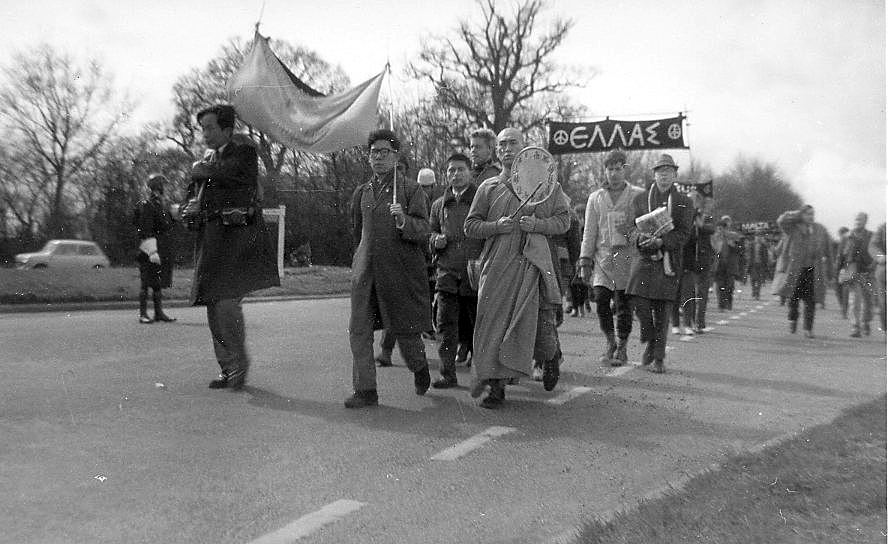
The Aldermaston March was newsworthy for the News of the World who would titillate their readers in their Easter Sunday edition with stories of alleged sexual shenanigans in the overnight accommodation of the marchers.

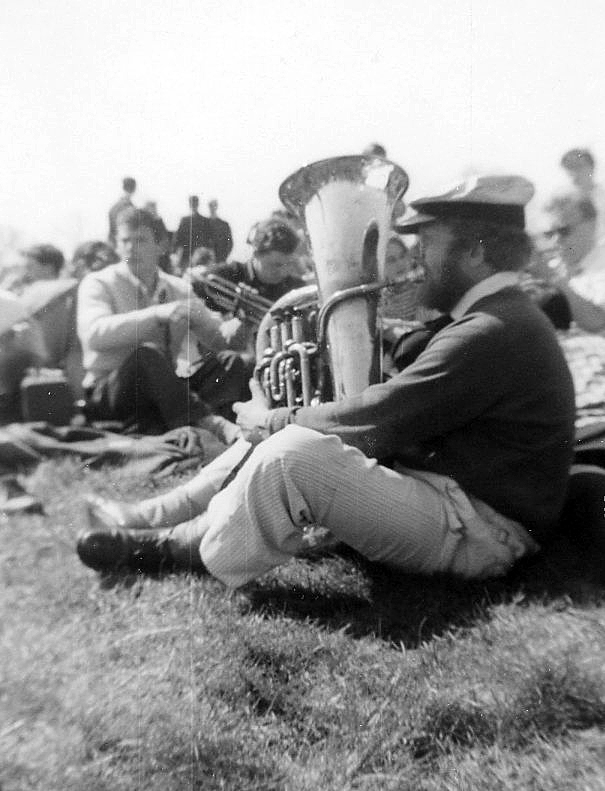

Less newsworthy, seemingly, were the threats of attacks by British Union of Fascists on overnight accommodation venues.

Frustration within some of the nuclear disarmament movement with the polite, and as they saw it, ineffective approach of CND led to the formation of the Committee of 100, who promoted mass non-violent sit down protests, which led to hundreds being arrested and six of their number prosecuted under the Official Secrets Act. In turn, there were those within the Committee of 100 who came to feel that mass sit-downs and passive resistance was also ineffective, and some argued their case in the pamphlet with the memorable title Beyond Counting Arses. Some, calling themselves Spies for Peace took direct action to encompass blowing the lid off the State’s secret preparation for military and civil control over what bits of the United kingdom would be left after a nuclear attack – presumably contaminated bits of the Highlands, the Pennines, central Wales and bits of the moors of the Bodmin, Dart and Ex. They did this in their Good Friday, 1963 released pamphlet Danger! Official Secret RSG-6, and by simultaneously staging a protest during the 1963 Aldermaston march at the bunker RSG-6, just off the A4.

Others bravely took their opposition to Moscow with an unauthorised sit-down protest in Red Square against the Soviet ‘Workers’ Bomb (hurriedly suppressed of course).
The brilliant 1960 Beyond the Fringe sketch Civil War summed up the lunacy of atomic weapons and notions of survival following an atomic attack. A member of the public, Dudley Moore, in a pre ‘Pete and Dud’ voice asks the Government Civil Defence panel “Following the nuclear holocaust can you tell me when normal services would be resumed?” Jonathan Miller responds with a plum voice ” Very fair question. Following Armageddon we do hope to have normal public services working fairly smoothly… I think in all fairness I ought to point out… it will be something in the nature of a skeleton service.” Meanwhile, and not a satirical sketch, a Church of England Bishop was seen on newsreel blessing a new formation of atomic bomb equipped “V” bombers at a RAF base in East Anglia. The gruesome surrealness didn’t stop there either. It was said that the pilots of these V bombers wore an eyepatch, so that when they got blinded in their good eye by the brightness of the atomic burst from the bomb they had dropped over Minsk they could whip off the patch and pilot the crate back to Blighty with the remaining good eye. That’s assuming their handlebar mustaches hadn’t caught on fire, or that their fuel tanks hadn’t run dry. (There were question marks, it was said, about the flying range of these planes). Incidentally, they were latterly used to immobilise the landing strip at Port Stanley using conventional bombs, during the Falklands War, and seemingly cocked it up by poor bomb aiming, but did instantly create an adjacent golf course with plenty of bunkers.
History of The British bomb
Although many local CND group office bearers were largely drawn from the local ward Labour Party membership, and although there had been a transitory moment of triumph in the campaign for unilateral disarmament at the 1960 Labour Party conference at Scarborough, when a motion favouring unilateral atomic disarmament was narrowly carried, (tactical rather than ethical Trade Union block votes, to destabilise New Labour fore-runner Hugh Gaitskell, was why it scraped through, and it was never adopted as policy) the fact is that not only has the Labour Party always supported the British Bomb, but it was the Labour Party that secretly started the British Bomb.

Unknown to the post-Second World War British Parliament, or to all members of the Labour Government Cabinet, Major Clement Attlee had started the programme to build an independent British nuclear bomb in January 1947. The estimated costs were around £40 million, at a time when Britain was close to being bankrupt, and was already committed to repaying the United States for war loans, including the Lend-Lease loan. Rationing of food had become brutal. Bread, never rationed during the war, was rationed in post-war peacetime. The German Nazi slogan ‘Guns before Butter’ would have had an interesting resonance in Britain, if Parliament and the public had known. As it was, the final cost up until 1950, was closer to £100 million.
In October 1946 Hugh Dalton, Chancellor of the Exchequer and Stafford Cripps, President of the Board of Trade, told Major Attlee and fellow Cabinet Members within GEN75 – the committee secretly set up to look at nuclear energy – that the costs of developing an independent nuclear weapon were not sustainable. They were excluded from the select group that Major Attlee chaired three months later when the decision was taken to go ahead. (2) Mr Winston Churchill and his Conservative Party were delighted to discover the covert development of the British atomic bomb by their Labour colleagues, when they came to power in the 1951 General Election. The first British atomic bomb was finally exploded on October, 1952. It exploded on Montebello Islands, 80 miles off the coast of Western Australia. Not reported at the time, the radio-active fall-0ut drifted to several Queensland towns a hundred miles away.

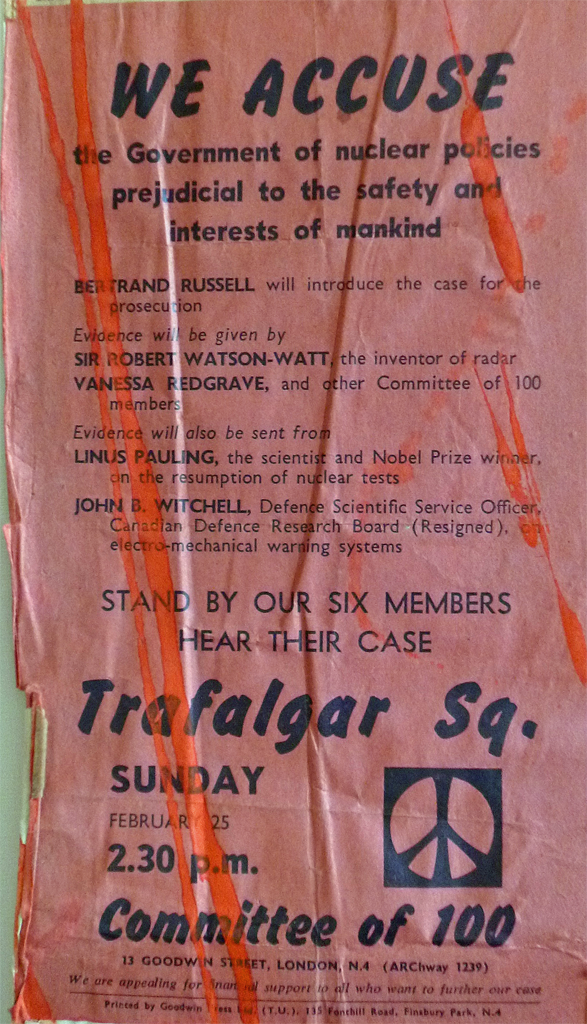
George Orwell would have been 58 in 1962, and would have supported CND at its formation, and then, given his left libertarian politics would have moved on to support of the Committee of 100. He would also have been a supporter of organisations such as Anti-Apartheid and also the Movement for Colonial Freedom (MCF had its right wing opposite in the League of Empire Loyalists, many of whose members were also members of the British Union of Fascists). Although he had written a regular weekly column – As I Please – for the independent left of centre, democratic socialist weekly Tribune between 1943 and to 1945, and then occasionally until 1947, he had been critical of the Labour Party since the 1930’s. His critical attitude continued when they were in Government -between 1945 – 1950 – for not being radical enough in their legislation. Orwell’s desire to abolish the undemocratic House of Lords was one example. (3)
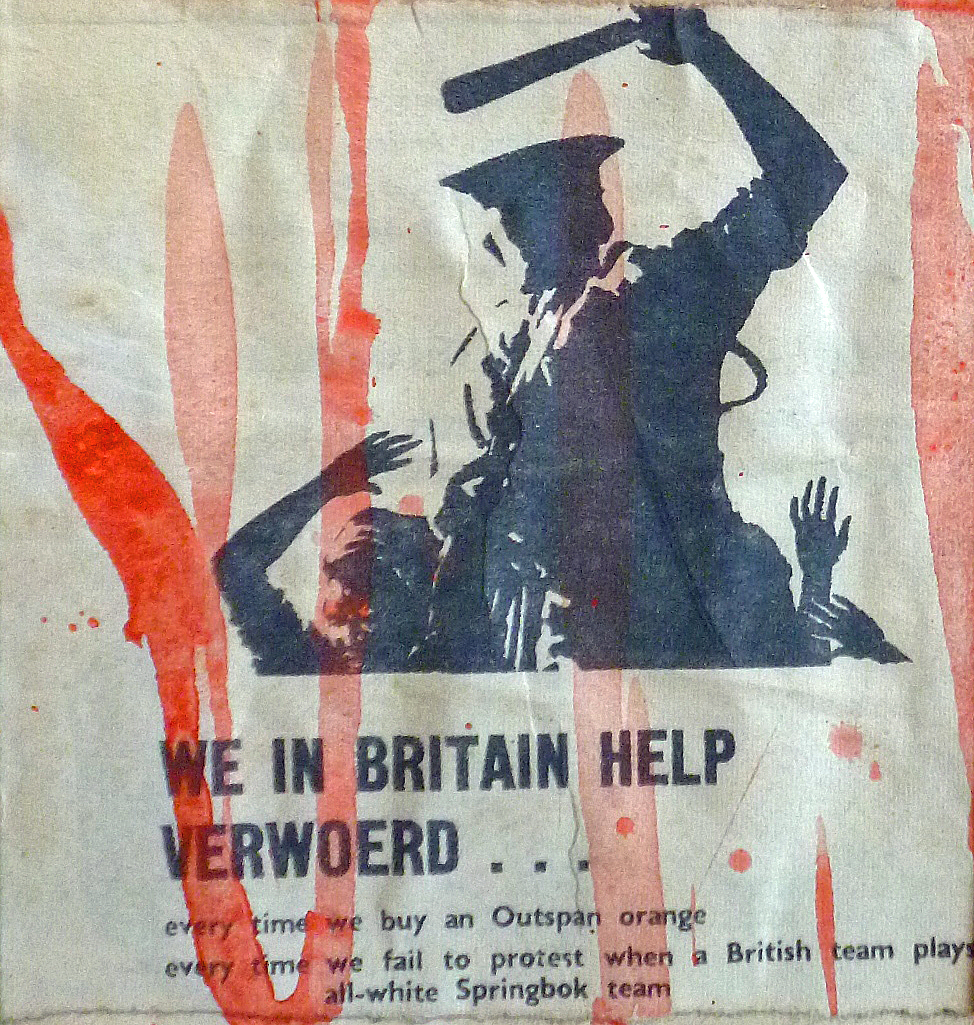
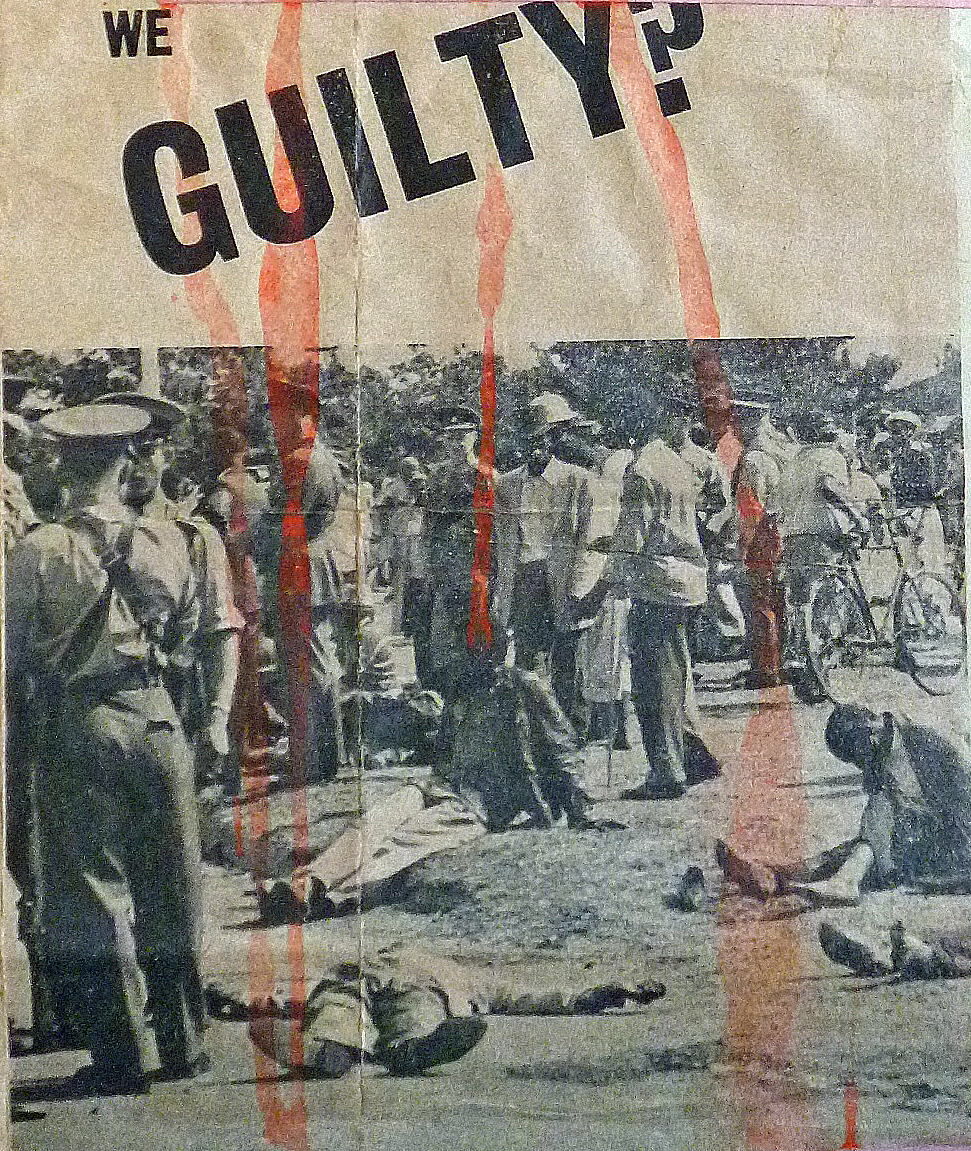

As a former divisional police office in British occupied Burma he was one of the few commentators on the British Left in the 1930s to highlight aspects of ignorance and hypocrisy within the British Labour Party and some other British Left groupings in their views about the ‘dependencies’, and pointed out that when talking about dependencies of the democratic British State what was really meant was ‘subject races’, adding that the combined Empires of Britain and France had six hundred million disenfranchised ‘subject races’. (4)
Although Anthony Eden, as foreign sectary in the wartime coalition argued with his American counter-part against including British colonies in any declarations of Freedom and Independence in the 1942 Atlantic Charter of Human Rights, on the grounds that most in the colonies were unable to govern themselves, his views had also been shared by Socialists such as Sydney and Beatrice Webb. They had written in the New Statesman in 1913 ‘It would be idle to pretend that anything like effective self-government, even as regards strictly local affairs, can be introduced for many generations to come – in some cases, conceivably never’ (5)
One of the last things George Orwell wrote, in a manuscript notebook in March 1949 was:
“People in Britain very high-minded abt American treatment of Negroes, but cf. conditions in South Africa. Certainly, we in Britain, have no control over S.Africa, but neither have the people in the Northern States much control over what happens in Alabama. Meanwhile we profit indirectly from what happens in S.Africa, in Jamaica, in Malaya etc. But these places are separated from us by water. (Emphasis Orwell’s) On this last fact the essential hypocrisy of the British labour movement is based.” (6)
Labour Government and Colonies and Malaya
Although there was no way Labour could duck independence for the Indian sub-continent they hung on to British Empire colonies, using peace-time conscripted men to fight “insurgency” in, for instance, rubber and tin rich Malaya. It was also the Labour Government that formalised peacetime conscription in Britain in 1948 (7), and the Conservative government continued to use these conscripted men in “insurgencies” in other British colonies, and in what they regarded as their spheres of interest: Egypt, for instance. But it was a Conservative government that also scrapped peacetime conscription with legislation brought in, in 1957 to phase it out. It was the Conservative Prime Minister Harold Macmillan, too, who acknowledged the “Wind of Change” (an expression he coined) blowing over the British Empire colonies.

Meanwhile, on 3 July, 1962 Algeria became an independent state, following a decade of terrorist/military struggle between the nationalist Algerian FLN and the French occupiers. Geneva Conventions about warfare had been thrown out the window by elements within the French army, using tactics often similar to those of the Nazi Gestapo. By 1960 public support for a continued occupation of Algeria had waned significantly in mainland France and General De Gaulle was in negotiations with the FLN, with the objective or arriving at a peace settlement. A terrorist rearguard action was mounted by a group of ex-French army and currently serving officers, known as the OAS, many sympathetic to the pre-war Action Française, often pro-monarchist and Catholic reactionary in nature. Besides indiscriminate bombings and shootings in Algeria the OAS mounted four mainland assassination attempts on De Gaulle, the last on 22 August, 1962, outside Paris. The curiosity about the “Help for the Algerian Refugees” flyer is: which refugees? Le Patron remembers the The Algerian Question Penguin Special, but the refugees? In 1962 the refugees from Algeria were the pieds-noirs, Europeans long settled in Algeria; Sephardic Jews and the harkis. The harkis were Algerian moslems who had not supported the FLN, many of whom fought with, or supported the French administration in Algeria. Some were drawn from tribes from the Sahara. These refugees, including the harkis, were accepted into mainland France.
One of the agreements between De Gaulle and the FLN in a post Algerian independence set-up was the right of the French Army to use land in the Algerian Sahara, land that had already been used by the French Government in 1960 to explode their first atom bomb. (7)
The intensity of the Cold War, and the attendant fear of nuclear war, had not receded with the end of the Korean war in 1953. 1956 had seen the United Soviet Socialist Republics crush the workers of Hungry; Gary Powers in a high altitude U-2 spy plane was shot down in 1960 and the East German the Workers’ Paradise built a wall in Berlin to stop their own people from crossing into West Berlin. Anyone who attempted to scale the barbed wired topped wall was shot by the “proletarian advanced guard” security services. In a well publicised early incident in August 1962 Peter Fechter, an 18 year old bricklayer was machine gunned in the back by the border guards as he attempted to escape from the East Germany. He bled to death, crying for help, whilst the border guards looked on. (The Cuban Missile Crisis was to follow in October,1962.)
With the exception of most anarchists and left libertarians (who usually took a ‘Neither East or West’ position) , many of those in Britain with a liberal humanitarian outlook, and the radical element in the Labour Party rank and file membership, perceived the enemy in the Cold War to essentially be the United States of America. For the members of the Communist Party and the small Trotskyists groupings America was unequivocally the enemy.
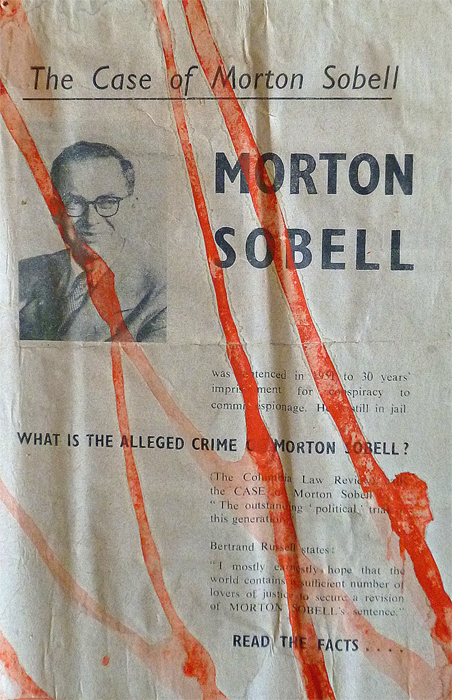
The case of American Morton Sobell was taken up by campaigners from largely within this milieu. Morton Sobell had been imprisoned in 1951 for a term of thirty years for allegedly passing secrets to the USSR, and his name had been linked to U.S. atomic spies such as Julius Rosenberg. Belief in his innocence and outrage at his imprisonment led his supporters to term his trial “the outstanding political trial of this generation”.
The campaign to establish his innocence, and the believed gross miscarriage of justice, continued well beyond 1969, when he was released from Alcatraz after serving 17 years of the 30 years prison sentence. However, in a New York Times interview, 11 September 2008, he ended up admitting passing on classified material to the USSR, and also implicated Julius Rosenberg.
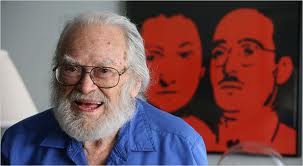
There is still a discussion about the importance to the USSR of the information they received about the development of the American atom bomb. Some views claim it accelerated the USSR’s own programme that was already progressing well, others that the claim is unproven. The Workers’ Bomb, as it was sometimes jokingly referred to within left-wing circles, was a cunning device, that when dropped on its target spared the proletariat, whilst killing well known class enemies such as the bourgeoisie, the petite-bougeoise, peasants, kulaks, the intelligentsia (cleverly sparing those elements within the intelligentsia who supported and defended the Stalinist and post-Stalinist USSR, i.e. Jean Paul Sartre, Berthold Brecht, Eric Hobsbawm, et al.)
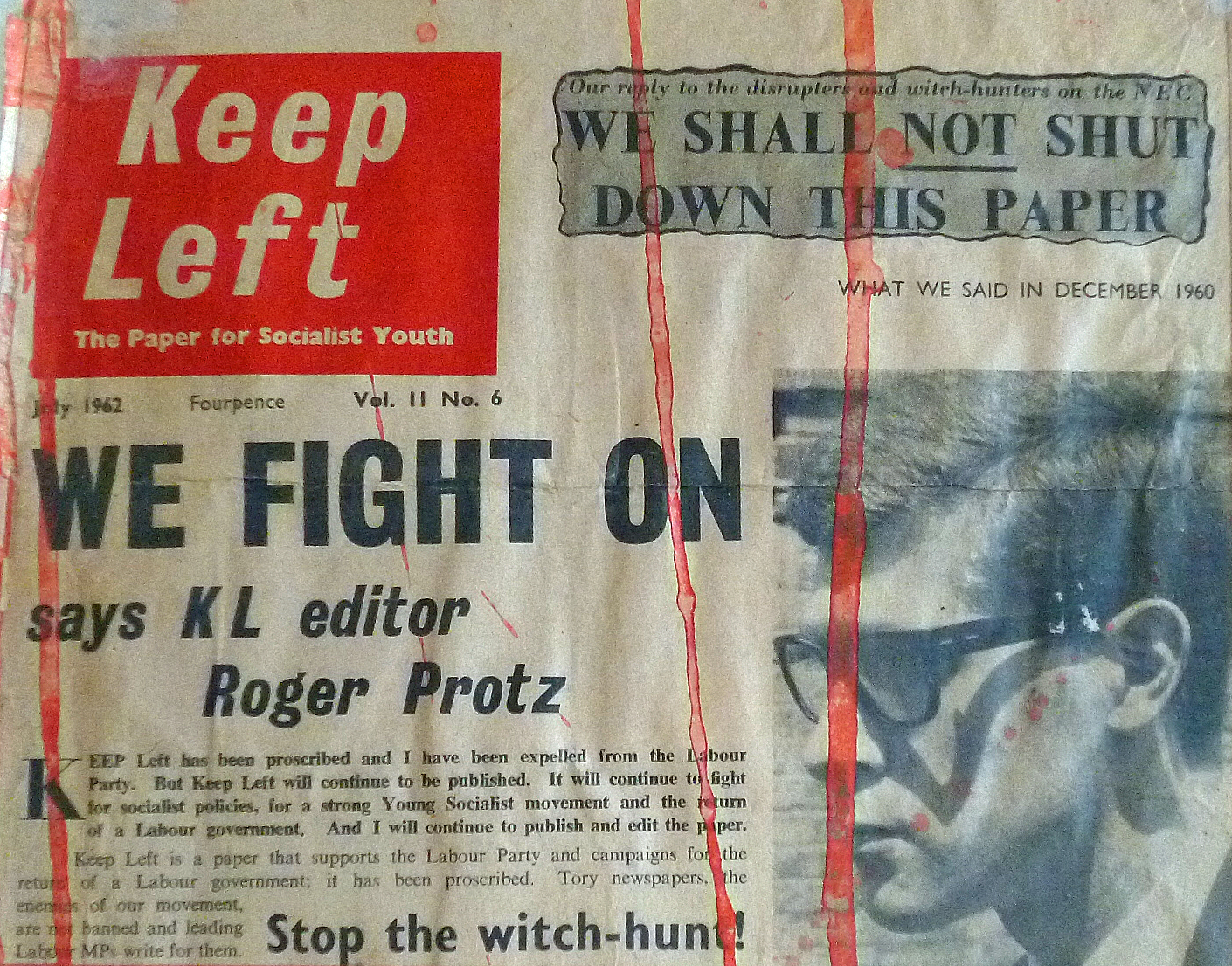
The British Communist Party had a declining membership in 1962 although the Party was still significant in several Trade Unions, with Party members as important office holders and leaders. Many Communist Party members had resigned in disgust or bewilderment in 1956 over the military intervention of the USSR to quash the Hungarian Uprising. Most still believed in Marxist-Leninism and most found a home in the small Trotskyist groupings, although some joined the Labour Party.
The Trotskyists were a squabbling group of followers of Leon Trotsky – squabbling mostly amongst themselves, each claiming to be the true and legitimate ideological torch-bearer of the Master. Like Stalin, who ordered his assassination, Trotsky believed in the elimination of class enemies, and the control of power by a small ‘enlightened’ elite (who also, of course controlled the secret police). Roger Protz in 1962 was editor of the Trotskyist Keep Left, a paper of the youth section of the Socialist Labour League. The Socialist Labour League had infiltrated the Labour Party Young Socialists, had been found out, and removed. Roger Protz, his cover blown, was expelled from the Labour Party. He then went on to edit the newspaper of another Trotskyist organisation, Miltant, and then moved on again to edit the newspaper of the International Socialists, The Socialist Worker. He resigned from Socialist Worker in 1974, and as a result had more time to prop up bars, sampling various brews, without feeling guilty about not rushing down to the factory gates to hand out leaflets urging the working class to rise up. A renowned member of the British Campaign for Real Ale, he is now an international expert on beer. His The Complete Guide to World Beer (2004) is one of three authoritative books he has written on the beverage.
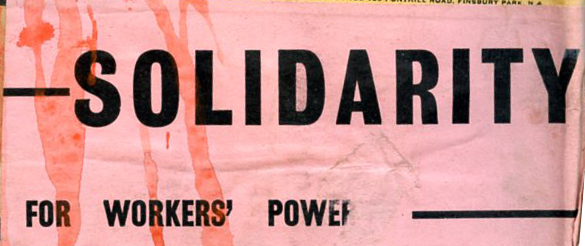
Solidarity was an interesting political group that made a journey from Marxist-Leninism, to Marxism to left libertarianism. The founding group left the Communist Party after Hungary, and then found the autocratic nature of the Trotskyist Socialist Labour League too much to swallow, and in spitting it out started to question Leninism and elitist left ‘revolutionary’ parties. Besides a healthy dose of original thinking, their magazine had a good element of humour, very rare in the hectoring and deadly earnest world of the hardbore left. By a curious coincidence Solidarity wound down in the same year the British Communist Party closed shop: 1991.
And today, 2014?

Despite the collapse of the Soviet Union in late 1991, Labour Prime Minister Tony Blair told the House of Commons in 2006 that it would be “unwise and foolish” for the United Kingdom to give up nuclear weapons, when he outlined Government plans for building a new generation of nuclear warhead equipped Trident submarines, plans that have been supported and continued by the present Conservative/Liberal Democratic coalition government.
The number of British nuclear warheads is, in 2014, estimated to be 225, that is: 225 potential Hiroshima’s. Labour, Conservative and Conservative/Liberal Democrat coalition governments have successively refused to give exact numbers of the nuclear warheads. The Trident Missiles which deliver the atomic warheads are manufactured at Aldermaston, and Aldermaston continues to be the centre for research and development of a new generation of atomic warheads.

The Trident missiles are fitted to Vanguard class submarines – up to 16 missiles per submarine (again: 16 potential Hiroshimas). The base for these submarines is at Faslane, near Helensburgh, twenty-two miles down the Clyde from Glasgow. Holy Loch, across the Clyde from Helensburgh was between 1961 and 1992 a base for U.S. Polaris nuclear submarines.
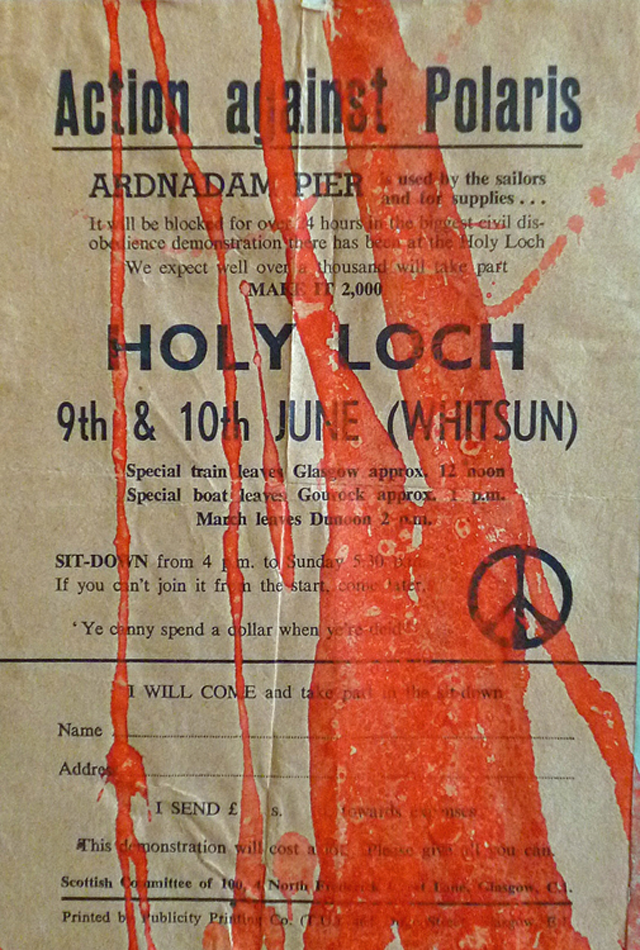
Following the collapse of the Soviet Union the base was vacated in 1992.
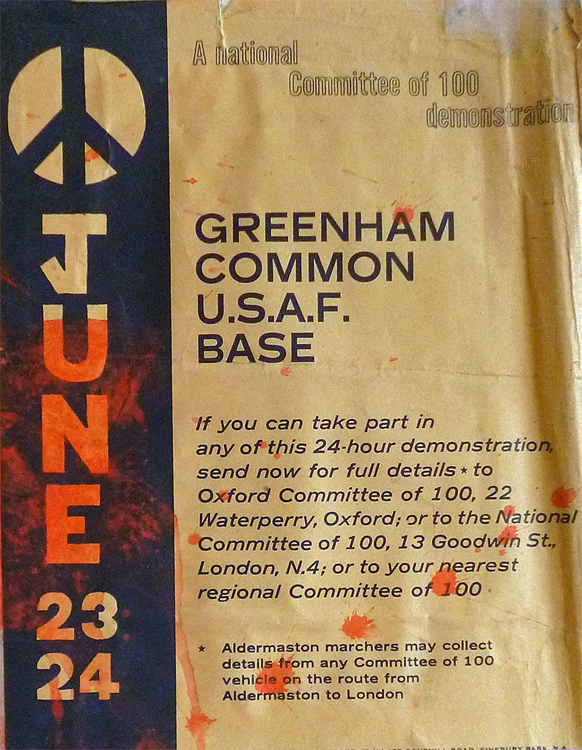
USAF Greenham Common, a Cruise missile base in the 1980’s, was also closed for the same reason in 1993. However, the British Government “permits the U.S. to deploy nuclear weapons from its territory”. (8)
But meanwhile, north of the Border….
After September 2014, the former Kingdom of Scotland may no longer be part of British Government “territory”. It would have been a far-seeing crystal ball gazer to have predicted in 1962 that because of the growth of the Scottish National Party the mainstream Unionist political parties would have set-up a devolved Scottish Government with a proportional representation bias, it is claimed, they hoped would prevent an outright Nationalist majority government from ever being formed. (Whilst proportional representation was and is denied to those voting for political parties into the House of Commons.) In a landslide victory in the Scottish General Election of 2011 the Scottish Nationalist Party formed a majority government, and with that mandate brought in legislation so that on 18 September 18, 2014 voters in Scotland will have the opportunity to vote for an independent Scottish state.
Although George Orwell thankfully was wrong in his predictions about the chances of nuclear weapons blowing the world to smithereens by 1951, he was interestingly on the ball about the possibilities of the development Scottish nationalism in a post-war Britain. Writing in February, 1947 he said “Up to date the Scottish Nationalist movement seems to have gone almost unnoticed in England… It is true that it is a small movement, but it could grow, because there is a basis for it. In this country I don’t think it is enough realised – I myself had no idea of it until a few years ago – that Scotland has a case against England.” (9) In January 2014 the Scottish National Party was the largest political party in Scotland, in terms of membership, number of MSPs and local councillors.
When George Orwell moved in 1947 to the Isle of Jura from London, and started work on his next novel after Animal Farm: Nineteen Eight Four, the SNP did not even have one MP in the House of Commons. And, as far as can be discerned, not one single councillor in local Scottish government in 1947.
Although the Scottish National Party has changed its policy of withdrawing from Nato, it remains committed, in its referendum manifesto, to outlawing all nuclear weapons from Scotland, a commitment it says will be written into the post-independent Scottish constitution.

Meanwhile, in 2014, it is a curious fact that any small town in England can muster significant numbers of Spiritualists, Jehovah’s Witnesses, evangelical Christians and imminent spiritual Armageddonists to regular congregations during the week whilst the same small (and large) towns can hardly muster a dozen dedicated supporters of unilateral disarmament, or manage, for instance, a significant protest about the recent banking scandals.
The significant protest in England in 2014 is – and no-one saw this coming, either – is from the fastest growing political party in England, a party that has the mainstream parties rattled: the Nigel Farage galvanised United Kingdom Independence Party, which correctly highlights the strikingly undemocratic nature that goes with membership of the European Union. That Farage is a right-wing free market libertarian (who also wants to keep a British bomb) does not invalidate his analysis of a dictatorial Brussels, run by unelected Commissioners who dismiss and over-rule the desires of national electorates when they don’t suit their own monolithic agenda, creating an unstable political situation in Europe. It is something that a left libertarian such as George Orwell would have been high-lighting too.
He would have found politics in Britain in 2014 as potentially revolutionary as he felt they were in wartime Britain between 1940 and 1942. Revolutionary in the sense of significant potential changes afoot. The revolutionary sentiment he detected in 1940 was, by implication, a left libertarian questioning of the power structures within the British Isles. Some expression of this was the forming of the wartime Common Wealth Party. In 2014 the revolutionary sentiment is nationalistic, a nationalism mostly based not on racial antagonism but on a sense of democratic injustice. Margaret Thatcher’s Poll Tax roll-out in Scotland, before England, was one of several ‘injustices’ felt keenly north of the Border. If one didn’t know better, one might have assumed that Thatcher was an agent-provocateur, secretly working for the SNP. It took Alex Salmond’s return from Westminster to focus and galvanise the sense of injustice felt, and pilot the SNP to where it is now.
The same sense of injustice in England has been felt about undemocratic edicts from Brussels. Although a loose analogy, the commissioners of the European Union are similar to a situation where it would be an unelected House of Lords formulating legislation for England, with the elected House of Commons only occasionally able to modify, or tinker around the edges of it. It is not surprising that UKIP, with Farage playing the same role as Salmond in Scotland, is making the English mainstream parties nervous. He correctly calls them the political classes, and the political classes have historically sent their redundant politicians to Brussels, where they draw very large EU salaries and EU retirement pensions, whilst telling us, and the rest of the European electorate what we can and can’t do: Leon Britten, Neil Kinnock, Peter Mandelson, Paddy Ashdown, along with all their other high-handed European Commissioners pals.
Crystal ball gazing or having a London School of Economics PHD in Political Science, will not help foresee what will happen in the next ten years in Britain. Le Patron guesses that voters in Scotland will not vote for “independence”. They already have the best of both worlds, with a devolved government, and the unionist parties promising even more devolvement. But if “independent”, will an independent Scotland find themselves trapped in the financial and political dictatorship of the Euro and EU fishing stock quotas not to their liking? (10) Will they find being part of Nato comes with the obligation to allow nuclear warheads, even occasionally, on their land, or berthed at Rosyth? Will Nigel Farage’s UKIP continue to be a rising star in the English political ferment? And as an economist and pragmatist, will Farage decide that keeping an expensive English nuclear deterrent makes no sense?
And what has any of this got to do with real democracy? Social, political and economic? All is not lost comrades! Obligatory classes in the Swiss model is a starting point. Recommended reading would be Why Switzerland, Jonathan Steinberg, Cambridge University Press. Meanwhile, closing time is in twenty minutes. Whoops! Sorry, comrades, the Revolution will have to wait. I’m down the boozer. Mine’s a…..
1. You and the Atom Bomb, Tribune, 19 October, 1945. In Collected Essays, Journalism and Letters of George Orwell, Volume 4. Penguin.
2. See Cabinets and the Bomb, Peter Hennessy, Oxford University Press.
3. See, amongst his other writing on the Labour Party, London Letter to Partisan Revue, August, 1945, in Collected Essays, Journalism and Letters of George Orwell, Volume 3. Penguin.
4. Not Counting Niggers, a review of a then much discussed book Union Now, by Clarence K. Streit, published in the Adelphi magazine in July 1939, Collected Essays, Journalism and Letters of George Orwell, Volume 1. Penguin.
5. See The Lost Literature of Socialism, George Watson. Lutterworth Press.
6. Extracts from a Manuscript Note-book, Collected Essays, Journalism and Letters of George Orwell, Volume 4. Penguin.
7. Strictly speaking, the first example of peace-time conscription in British history was April, 1939 by the National Government. This was an insurance against a probable war.
8. The first French bomb exploded in the Sahara was three times as powerful as the bomb dropped on Hiromshima, and recently released papers show the fall-out spread far further than acknowledge at the time.
9. See Wikipedia Nuclear Weapons and the United Kingdom.
10. As I Please, 14 February, 1947, Collected Essays, Journalism and Letters of George Orwell, Volume 4. Penguin.
11. The SNP’s proposed use of British sterling is not feasible, given that a condition of becoming a member of the European Union means signing up to the Euro.







































 pete grafton
